

Inside the future of prostate cancer detection and care
Success! Your request has been sent and a representative will be in contact soon.
Do you know someone who has experienced prostate cancer? With one in six men diagnosed in Australia, chances are, you probably do. The prognosis for prostate cancer is good if detected early, but despite this, we are seeing an increase in men dying of the disease. We are also seeing more young men with the disease.
You may wonder why this is happening, and how we can improve diagnosis and treatment.
The Precision Prostate Cancer Research team at The University of Queensland Centre for Clinical Research (UQCCR) is dedicated to answering those questions, with ground-breaking research underway.
The AMA Queensland Foundation recently attended a research update and tour of the Herston UQCCR facility where Urologist Associate Professor Matthew Roberts and Scientist Dr Kevin Koo are focused on innovations that will support better treatment for the disease and earlier and more accurate detection.
The visit was not only a chance to find out about recent research progress, but also to see the digital qPCR apparatus in action, which was purchased through partial support from the Foundation.
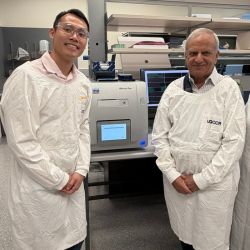 The Foundation’s $10,000 contribution in 2024 supported 20 cancer patients who were undertaking a clinical trial. Through blood sample analysis using the apparatus, the team were hoping to better measure immunological biomarkers of those patients and better understand their response to treatment.
“Thus far, this research project has led to the progress of prostate-specific antigen biomarker detection (current gold standard testing in the clinic) at single-molecule detection sensitivity. This highly sensitive test can allow for prostate cancer relapse to be detected at the earliest instance for timely clinical action,” Dr Koo said.
AMA Queensland Foundation Dr Dilip Dhupelia said the apparatus was a much-needed tool to progress such innovative research, and it was exciting to see the apparatus in action.
“As the philanthropic arm of AMA Queeensland, supporting innovation such as this work and partnering with a centre of research excellence is in keeping with one of the strategic objectives of the Foundation.”
“This kind of advanced gene detection is changing the face of cancer care, and it is amazing to hear of the advancements we are making in prostate cancer right here in Queensland,” Dr Dhupelia said.
The research team also outlined further innovations in cancer biology research, including details of an exciting development in prostate cancer detection.
Currently prostate cancer is detected by measuring the amounts of prostate specific antigen (PSA) in the blood. However, not every elevated PSA test indicates prostate cancer. Dr Koo and A/Prof Roberts outline their latest recent research, which has involved developing a way to more accurately determine cancer-specific biomarkers, using a urine test.
“Our lab is interested in the use of non-invasive prostate cancer urinary testing for early cancer detection and risk classification of aggressive prostate cancer. This will be game-changing for prostate cancer management as it can potentially reduce the need of invasive biopsy procedures and associated harmful side effects,” Dr Koo said.